
April Dunford is the OG expert on positioning (see: Obviously Awesome). This latest book is about taking the positioning you've developed and weaponising it into a compelling story which forms the core of your sales and marketing efforts. She focuses a lot on helping your prospective customers to fully understand the options they have, the tradeoffs associated with each one, and in which situations your solution makes the most sense.
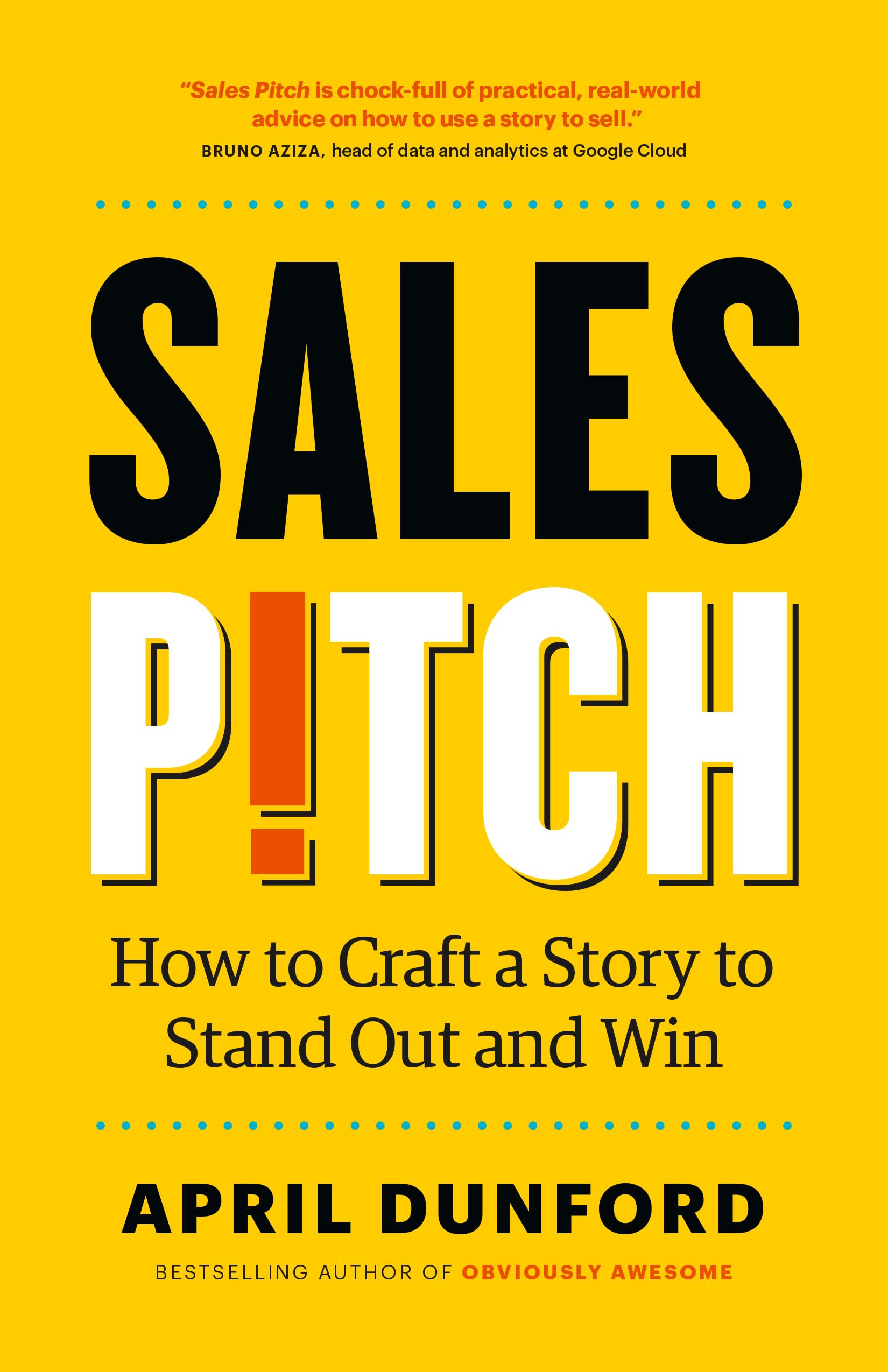
Great positioning is worthless if it can’t be turned into a pitch that the sales team can use to close business. It isn’t enough to have strong product positioning that gets used only by the marketing department. That positioning needs to be communicated with a story that everyone on the sales team can use.
In marketing, we make a distinction between “considered” and “unconsidered” purchases. Typically, an unconsidered purchase is easier to make than a considered purchase. [...] Considered purchases take more time and effort because there are potentially negative consequences if you make a poor choice.
Most technology purchased by businesses, from accounting software to project management tools, are highly considered purchases. The stakes are high in a business purchase. Often, the purchase must be justified to a manager who might question your competence if you make a bad recommendation.
We dramatically underestimate how difficult it is to make a considered purchase decision. As sellers, we are often so preoccupied with how difficult it is to sell a product that we completely lose sight of how buyers are feeling during the purchase process.
What happened there? Was the salesperson giving me a pushy hard sell on a toilet? No. Was the salesperson giving me a walkthrough of every feature a toilet could have? Nope. What he did was give me a way to categorize all of my options so I could make an informed choice for myself based on what was most important to me. He was acting like a knowledgeable guide, and in doing so, he taught me how to confidently make a purchase. I believe that for any considered purchase, we can create a pitch, in the form of a story or narrative, that teaches customers how to buy. Not only that, but I also believe that we can create a narrative that helps our best-fit customers easily understand why they should choose us and feel very confident in making that decision.
Emotions matter in business purchases, too, but the types of emotions that drive purchase behaviors are often different. Fear is the granddaddy of B2B emotions. Fear of failure. Fear of the repercussions of making a poor decision. Fear of looking stupid. Fear of getting fired. In a sales situation, invoking feelings like trust and confidence can go a long way toward helping buyers overcome their fear.
Buyers would like vendors to help them understand the trade-offs between different approaches to solving their problem. They want to understand potential pitfalls and how to avoid them. Buyers are looking for ways to understand what choices are available to them and how they should choose between them.
Knowing your customers is vitally important. You need to deeply understand what motivates them, and the jobs they need to accomplish, and you can understand that only by talking to your customers because they are experts in their pain. After a purchase, customers can tell you a lot about how they are using your product and what they love and hate about your solution. Customers can also tell you what other solutions they evaluated and, if you are good at pulling this out of them, why they chose you. But customers don’t understand the market the way you do. As vendors operating in this solution space, you are more knowledgeable about what is possible and what isn’t. You understand the underlying technology, and what its potential is, much better than your prospects do.
It is impossible to differentiate yourself without addressing the alternatives.
The most interesting thing to me about the IBM pitch structure was the way these pitches started. The conversation never began with a discussion about the company or the product. Instead, it always started with a discussion about IBM’s point of view on the market. Reps would talk about what IBM perceived to be important considerations for companies looking at any solution in the market. They would then discuss how different approaches to providing a solution stacked up. Reps were doing discovery at this step, but also giving the customers a big picture of the entire market and teaching them how to make informed choices. The sales reps were skillfully positioning our product in the minds of customers, relative to the competition, and that was winning us deals.
The goal of a great sales pitch is to help customers understand all their choices, the trade-offs between each, and when to pick your solution.
Let’s look at the five components of positioning and how they relate to each other.
In the early stages of a purchase process, the champion matters much more than any other person. It’s the champion who is doing the research to determine what the requirements are and making a shortlist. They are frequently the person sitting across from you in a first sales call. If you can’t get the champion interested, you don’t even get a chance to worry about all the other stakeholders because the champion is going to eliminate you from the process before they get those other groups involved. It is critical that your positioning and sales pitch are tuned to resonate for the champion if you want to be considered for a purchase.
Sometimes, the insight will seem like an obvious statement of fact, and that’s okay.
About Postman, Asthana told me, “The narrative we created around ‘an API-first world’ really helped customers understand our way of looking at the business potential for APIs and let us carve out a unique space in the market.”
This section of the sales pitch should reflect the situation of the prospect as closely as possible. For example, you may have a product that serves a wide variety of customers, from banks to manufacturing plants. If you use case studies as proof at this step, ideally you would show a banking case study to a bank and a manufacturing case study to a manufacturer. Similarly, if you are showing quotes or reviews of your product, the person you are quoting should be as similar as possible (in terms of role at the company and their seniority) to the prospect you are talking to.
It isn’t unusual to see inexperienced sales folks get to the end of a sales meeting and leave it up to the prospect entirely to decide what the next step should be. Now is the time to embrace your role as a guide helping the buyer through the purchase process.
There is also a tendency for sales reps to drift off message over time. The mature sales organizations I have worked with will periodically “recertify” reps on the pitch by having them pitch to the sales executive to ensure that the story remains consistent. Without regular check-ins, it becomes very hard to ensure that your sales team is delivering the message in a consistent way over time.
In Step 6, Proof, some companies default to sharing a case study, and often use the same case study for every prospect. If your prospects are similar, this might be fine. But ideally you want your proof to connect to both the value themes you’ve covered and the individual prospect’s situation.
This book is about how to build a sales pitch, so naturally we have focused on how the pitch gets used in a sales call. But that isn’t the only place this story will be used. In particular, once the pitch is developed, it will become a key input to your company’s marketing messaging and can be used either directly or indirectly in different types of marketing content.

I'm James—an engineer based in New Zealand—and I have a crippling addiction to new ideas. If you're an enabler, send me a book recommendation through one of the channels below.

